NOTARY PUBLIC VANCOUVER - JEROME TSANG NOTARY PUBLIC & YUN JIN (LUCY) KIM NOTARY PUBLIC
  • Home
  • About Us
  • What we do
    • Real Estate >
      • Quotation Request Real Estate
    • Personal Planning >
      • Quotation Request Personal Planning
    • Notarization >
      • Quotation Request Notarization
    • Apostille
  • Contact Us
  • Projects
  • News & resources
    • FTHB PTT Exemption
    • Newly Built Home PTT Exemption
    • FTHB GST Rebate
    • Understanding Foreclosure

Understanding the Scope of a BC Notary Public

5/25/2026

 
Picture
In British Columbia, a Notary Public plays an important role in helping individuals and families handle key legal matters—especially those that require reliability, clarity, and proper documentation. While notaries are not lawyers, they are highly trained legal professionals with a defined scope of practice focused on non-contentious matters.

What Can a BC Notary Do?
A BC Notary Public is authorized through the Society of Notaries Public of British Columbia to provide a range of legal services, including:

  • Real Estate Transactions: Preparing and registering documents for purchases, sales, mortgages, and refinances through the Land Title and Survey Authority of British Columbia.
  • Wills & Estate Planning: Drafting simple wills, powers of attorney, and representation agreements.
  • Notarizations: Certifying true copies, witnessing signatures, and administering oaths and affidavits.
  • Authentication & Certification: Assisting with documents intended for use outside of Canada.

What Is Outside a Notary’s Scope?
BC Notaries generally do not handle contentious legal matters, such as disputes, litigation, or complex family law issues. In those situations, clients are typically referred to a lawyer.

Why This Matters to Clients
The scope of a BC Notary’s practice is designed to provide accessible and efficient legal services for everyday needs—particularly in real estate and estate planning. For many transactions, working with a Notary can be a cost-effective and streamlined option.

Let us handle the paperwork for your next big milestone.  Click here to reach out today to see how we can help.

Who Inherits if You Don’t Have a Will in BC?

5/6/2026

 
Picture
When it comes to estate planning in British Columbia, there is a common and dangerous misconception that your assets will naturally and seamlessly flow to your "next of kin" in the event of your passing. In reality, dying without a Will means you have essentially forfeited your right to decide who inherits your property, who cares for your minor children, and who manages your final affairs. Instead of a plan tailored to your family's unique dynamics, the provincial government provides a "one-size-fits-all" legal framework that may not align with your true intentions. This post explores the significant legal and financial consequences of leaving your legacy to chance under current BC legislation, illustrating why a proactive approach is the only way to truly protect those you love most.

WHAT IS INTESTACY?
In legal terms, dying "intestate" refers to passing away without leaving a valid Will, or leaving a Will that only accounts for a portion of your assets (known as a partial intestacy). In British Columbia, these situations are governed by the Wills, Estates and Succession Act (WESA), which serves as the definitive rulebook for distributing the estates of those who haven't left their own instructions. Since its implementation in 2014, WESA has modernized how the province defines family and inheritance, yet it remains a rigid system. Without a Will to name an Executor or specify beneficiaries, your estate enters a mandatory legal process where the court must appoint an administrator, and your assets are distributed according to a strict statutory formula that ignores personal relationships or verbal promises.  Here is a breakdown of how the BC government distributes an intestate estate:

1. The Spousal Priority - In BC, a "spouse" includes both legally married partners and common-law partners who have lived in a marriage-like relationship for at least two years.
  • If you have a spouse but no children: Your spouse inherits 100% of your estate.
  • If you have a spouse and children (All shared):
    • The spouse receives the first $300,000 (the "preferential share") and all household furnishings.
    • The remaining balance is split: 50% to the spouse and 50% divided equally among the children.
  • If you have a spouse and children (Blended family):
    • If any of the children are from a previous relationship, the spouse’s preferential share is reduced to $150,000.
    • The remainder is still split 50/50 between the spouse and the children.

2. The "Parentelic" System (No Spouse or Children) - If you pass away without a spouse or any descendants (children, grandchildren, etc.), WESA look "up" and "out" your family tree in a specific order:
  1. Parents: Distributed equally to both parents (or all to one, if only one is living).
  2. Siblings: If parents have passed, the estate goes to your siblings (and the children of any deceased siblings).
  3. Grandparents: If no siblings or their descendants exist, the estate moves to your grandparents.
  4. Aunts/Uncles: Finally, to your grandparents' descendants (your aunts, uncles, and cousins).

Note: BC law stops searching for heirs after the fourth degree of relationship. If no relatives are found within that scope, the estate "escheats" to the provincial government.

If you would like more information, feel free to give us a call or contact us for an appointment.

Committee of estate vs Power of attorney

4/7/2019

 
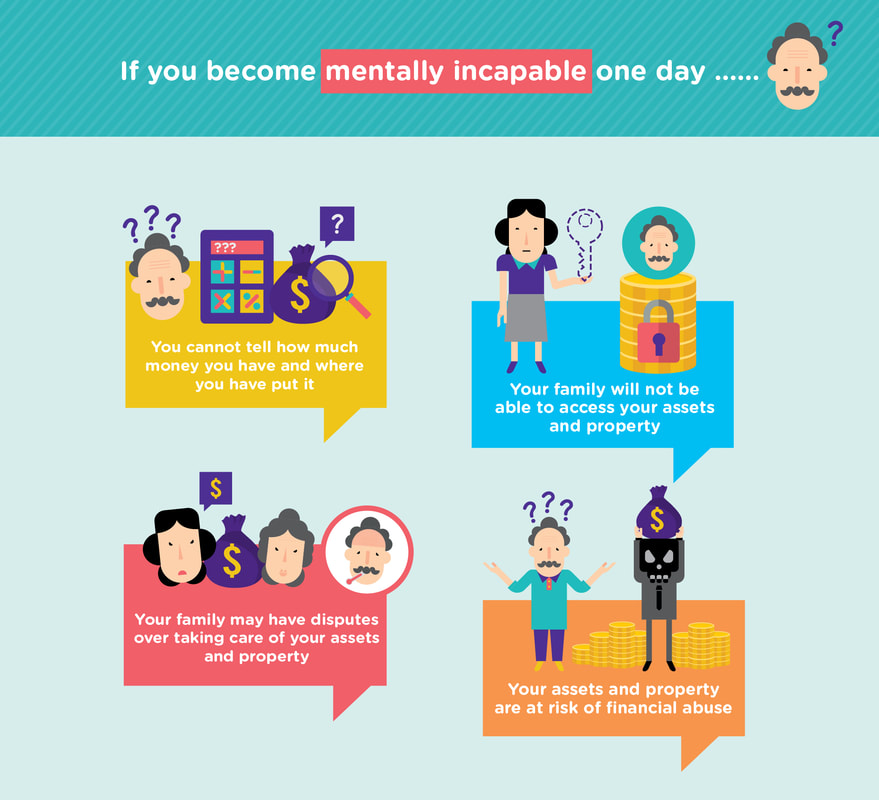
One of the most common questions I've been asked most about Power of Attorney (POA) is, what if I don't have a POA and I become incapable of making decisions for myself?  My answer is - you're going to create a lot of trouble for your family or whoever needs to help you to manage your affairs.

When an adult needs help managing their affairs because of mental incapability due to an illness, accident, disability or diseases associated with aging, their judgment may be impaired in some way. They may forget to pay bills or put money away and forget where it is. The adult may also be confused about banking, investments, property, and personal belongings. However, they may have planned ahead and authorized someone else to make decisions and managing their financial and legal affairs through an enduring power of attorney.

But what if the adult does not have a POA? 
Picture

Read More

Make a Will Week is April 7 to 13

3/27/2019

 
BC Notaries support the Province of B.C.’s proclamation declaring April 7 to 13, 2019 “Make-a-Will Week” and encourage the majority of British Columbian adult who don’t have a current Will to prepare one.
​
A 2018 survey by Ipsos for the BC Notaries Association found that while 67% of people aged 55 and older have a Will in place, 62% of people aged 35 to 54 and 77% of people aged 18 to 34 do not have a Will regardless of whether they own a home, have dependent children or other important considerations. 

Picture

Read More

Is it a good idea to add my children on the title of my home?

1/22/2019

 
This question has been asked numerous times.  And my answer is – it depends on your purpose.
​
Most parents, as they get older, would want to add their adult children on title of their home to save on probate fee when they pass.  Yes, although it is true that you can “save” on probate fee, but it can cost you more financially and have significant legal impact down the road.

Picture

Read More

What’s your 2019 New Year’s Resolution?

1/14/2019

 
Most people’s resolutions would include losing weight, exercising regularly, eating healthier so on and so forth.  Have you considered getting your estate and personal planning documents in order as this year’s resolution?

Wills, Powers of Attorney and Representation Agreements are the most common and are probably one of the most important documents in your estate plan.  Accidents can happen without any forewarning.  In the direst circumstances, if you pass away without a will, basically you are leaving up to the law to determine how you want your estate to be distributed upon your death.  Your family or closest friends, while grieving for their recent loss, are also required to apply to the Court to be the administrator of your will.  In other instances, you suffer sever injury or illness and are not able to communicate with anyone, who’s going to handle your financial, legal, or personal care matters?  Your family, even your spouse, would not be legally to handle your matters. 

Picture

Read More

    Categories

    All
    Buying A New Home
    Conveyance
    Estate Planning
    Joint Tenancy
    Non-resident
    Personal Planning
    Powers Of Attorney
    Property Transfer Tax
    Real Estate
    Selling
    Tenancy In Common
    Title Insurance
    Vacancy Tax
    Wills

    RSS Feed

Talk to us today!

Hours of Operation

Monday 9:00am to 5:30pm
Tuesday 9:00am to 5:30pm
Wednesday 9:00am to 5:30pm
Thursday 9:00am to 5:30pm
Friday 9:00am to 5:30pm

Saturday Closed
Sunday Closed

Email

[email protected]
Call and Fax
Phone: 604-266-6644 (Eng, 中, 한국어)
Fax: 604-266-6614
Fax: 604-266-6614
Addresss
Unit 205
5704 Balsam Street, Vancouver, BC
​V6M 4B9
Google Us
Picture
Picture
Members of the Society of Notaries of British Columbia

Copyright © 2024 Jerome Tsang Notary Corporation | dba Jerome Tsang and Lucy Kim Notaries Public| Notaries of British Columbia | Sitemap

  • Home
  • About Us
  • What we do
    • Real Estate >
      • Quotation Request Real Estate
    • Personal Planning >
      • Quotation Request Personal Planning
    • Notarization >
      • Quotation Request Notarization
    • Apostille
  • Contact Us
  • Projects
  • News & resources
    • FTHB PTT Exemption
    • Newly Built Home PTT Exemption
    • FTHB GST Rebate
    • Understanding Foreclosure